Living in the Pacific Northwest—whether you’re in Portland, Vancouver, Beaverton, or Camas—means enjoying rich greenery and towering Douglas firs. However, our frequent rainfall, damp climate, and shaded properties also create the absolute ideal breeding ground for roof growth.
If you’ve noticed dark streaks or green clumps forming on your asphalt shingles, you are dealing with roof algae, roof moss, or both. While many property owners view these growths as purely cosmetic issues, ignoring them can drastically shorten your roof's lifespan and lead to costly structural leaks.
Here is a complete guide on how to identify algae and moss, understand their distinct risks to your home, and choose the right steps to clean or replace your roof.
1. How to Identify Algae vs. Moss on Your Roof
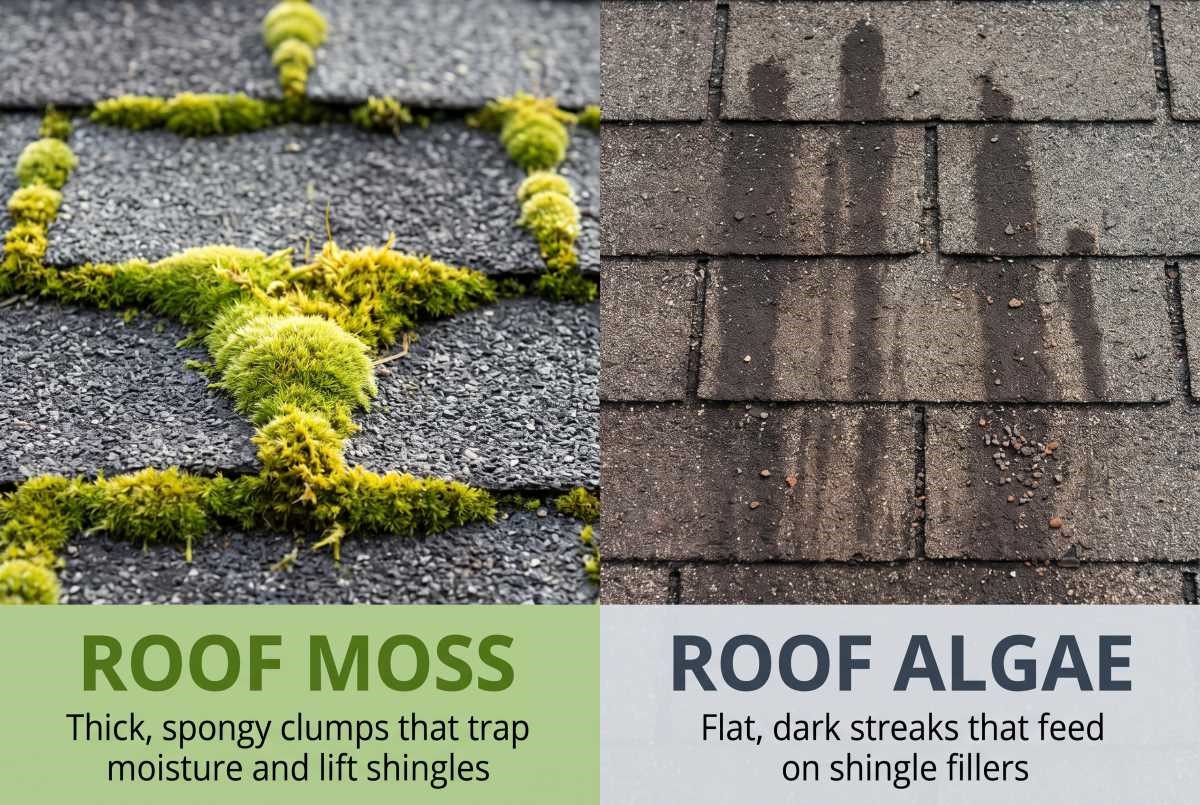
Though both thrive in the humid climate of Oregon and Washington, algae and moss look, grow, and interact with your shingles very differently.
Identifying Roof Algae
- Appearance: Dark brown, grey, or black vertical streaks running down the slope.
- Texture: Flat, smooth surface discoloration that looks almost like dirt, soot, or burn marks.
- Culprit: Primarily Gloeocapsa magma (blue-green algae), airborne spores that travel between neighborhood homes.
- Location: Concentrated on north-facing slopes or sections under dense tree overhangs that receive limited sunlight.
Identifying Roof Moss
- Appearance: Bright green, yellowish, or velvet-like clumps and carpeted patches.
- Texture: Thick, three-dimensional, and spongy.
- Culprit: Shallow-rooted non-vascular plants that thrive in continuous moisture and shade.
- Location: Starts in the small gaps between shingle edges and spreads across the face of the roof.
Algae vs. Moss Quick Comparison Chart
| Feature | Roof Algae (Gloeocapsa magma) | Roof Moss |
| Visual Identification | Black or dark grey vertical streaks | Raised, spongy green or yellow clumps |
| Physical Form | Flat, microscopic surface film | Thick, multi-layered 3D structure |
| Primary Food / Target | Limestone filler inside asphalt shingles | Trapped organic debris & standing water |
| Root Structure | No roots | Shallow root-like anchors (rhizoids) |
| Shingle Impact | Chemical breakdown & granule erosion | Physical lifting, cracking & moisture trapping |
| Severity Level | Moderate (long-term degradation) | High (immediate leak risk & structural decay) |
2. The Impact of Algae and Moss on Your Home
Left unchecked, both growths actively destroy the protective layer of your roof—though in distinct ways.
The Impact of Algae
- Eats Shingle Mineral Fillers: Modern asphalt shingles contain calcium carbonate (limestone). Algae uses this mineral as a primary food source, gradually breaking down the integrity of the asphalt matrix.
- Loosens Mineral Granules: As algae consumes the shingle material, the top layer of protective mineral granules detaches and washes into your gutters, exposing the raw asphalt to harsh UV rays.
- Reduces Solar Reflectivity: The dark pigment absorbs extra heat, raising attic temperatures and forcing your air conditioning to work harder during hot summer months.
The Impact of Moss
- Lifts and Curls Shingles: Moss roots wedge underneath shingle edges. As the moss expands, it pushes shingles upward, breaking their factory adhesive seal.
- Acts Like a Moisture Sponge: Moss holds heavy moisture against your roof surface for days or weeks after a rainstorm. This constant wetness rots the wooden decking underneath and rusts shingle nails.
- Invites Winter Freeze-Thaw Damage: In the Portland/Vancouver winter, water trapped inside thick moss freezes and expands, cracking shingles and creating direct entry paths for leaks.
3. Steps to Remove Algae and Moss (From Treatment to Full Replacement)
Depending on the age and overall condition of your roof, you have two primary options: low-pressure cleaning or full roof replacement.
Option A: Professional Soft Washing (For Younger, Sound Roofs)
If your roof is relatively new (under 10–12 years old) and has no structural sagging or damaged deck boards, a gentle cleaning can eliminate active growth.
- Apply Soft-Wash Solutions: Use a low-pressure application of biodegradable algae/moss killer (such as diluted sodium hypochlorite with specialized surfactants) to sanitize spores at the root level.
- Gently Brush Heavy Moss: Softly loosen thick moss clumps using a nylon brush.
- NEVER Pressure Wash: Crucial warning: Never allow anyone to pressure wash your asphalt roof. High-pressure water blasts away the protective granule layer, instantly cutting years off your roof's lifespan and voiding most manufacturer warranties.
- Install Zinc or Copper Strips: Placing metal zinc strips along the roof ridge allows rain to release natural metallic ions that prevent new algae and moss from establishing down the slope.
Option B: Full Roof Replacement (For Aging or Severely Damaged Roofs)
When a roof is past mid-life (15+ years), heavily infested with moss, or experiencing widespread granule loss, cleaning often acts as a short-term band-aid. A full replacement is the smartest long-term investment for PNW homes.
- Upgrade to Algae-Resistant Shingles: Leading manufacturers (like Malarkey) offer shingles infused with copper-containing granules, preventing black algae streaks from forming for decades.
- Replace Rotted Decking: A tear-off allows contractors to inspect the underlying plywood deck, replacing any water-damaged wood hidden beneath thick moss growth.
- Improve Attic Ventilation & Moisture Control: Modern ridge and soffit vents ensure air moves freely, reducing attic humidity that contributes to top-down moisture problems.
4. Preventive Care Tips for Portland/Vancouver Homeowners
Once your roof is clean or newly installed, simple maintenance prevents algae and moss from coming back:
- Trim Tree Overhangs: Cut back tree branches to allow direct sunlight and wind to dry off your roof after wet PNW storms.
- Clear Organic Debris Promptly: Remove pine needles, leaves, and twigs from valleys and roof junctions before they decompose into fertile soil for moss.
- Keep Gutters Flowing: Clean your gutters every spring and fall so water drains rapidly instead of backing up under the eaves.
- Schedule Annual Roof Audits: Have a local roofing professional inspect flashing, seals, and shingle condition once a year to catch growth early.
Protect Your Home with KVN Construction
For over 20 years, KVN Construction has helped property owners across Greater Portland and Vancouver maintain, repair, and replace roofs built to withstand the toughest Pacific Northwest weather. Whether you need an honest evaluation of your roof's current growth or a full replacement using premium algae-resistant shingles, our team is here to help.
Ready to eliminate black streaks and green moss? Contact KVN Construction today to schedule a free video inspection and estimate!
Subscribe to KVN Construction's Blog





Comments